
Do I need a warehouse early?
Not on day one. Open once multi-shop stock trips or import pallets waste too much time.

This Big Ambitions warehouse guide covers harbour imports, warehouse staging, vans/trucks, and Logistics Manager delivery plans. Logistics turns capital into time — the scarce resource after your first shops work. Verified August 31, 2026.
| Piece | Job |
|---|---|
| Harbour / importers | Contracts, price index, delivery days, limits |
| Purchasing Agent | Handles import paperwork from HQ |
| Warehouse building | Staging + vehicle parking slots |
| Logistics Manager | Daily delivery plans to shops |
| Delivery Driver | Operates vans/trucks by skill |
| Factory (optional) | In-house supply — see factory guide |
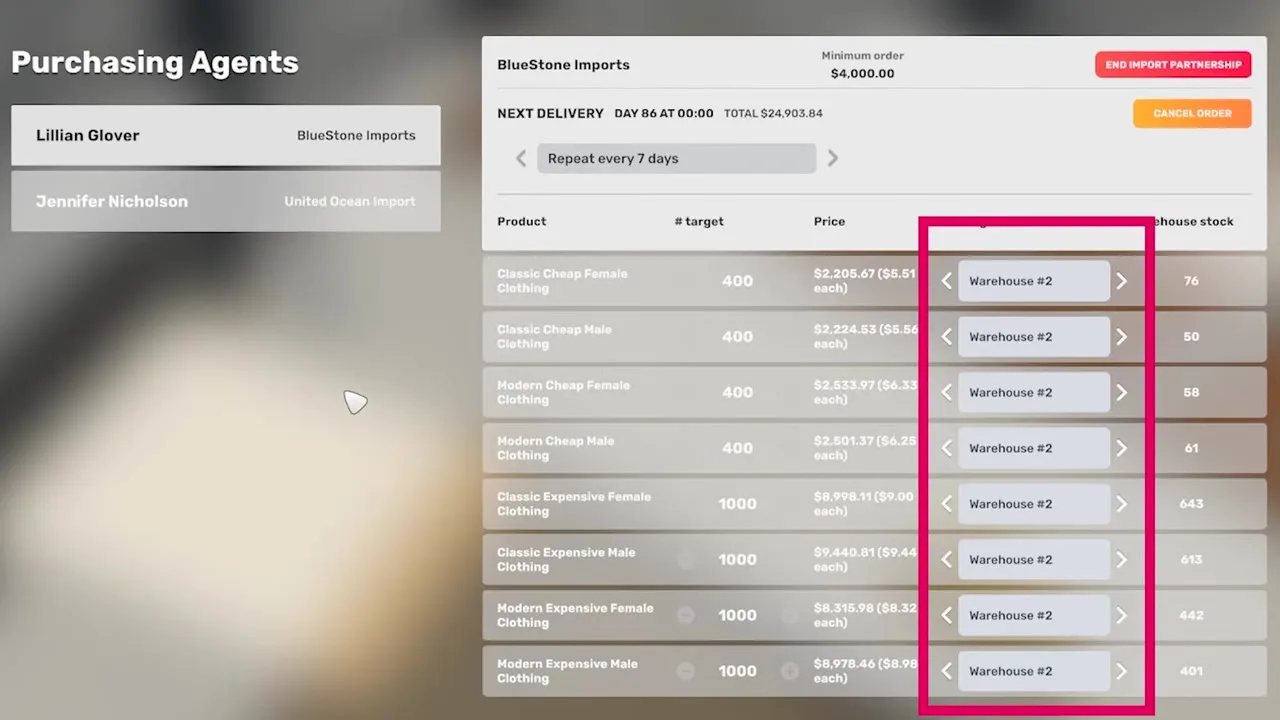
Imports replace “drive every wholesale run yourself” with contracts: importer identity, products, import price, weekly limits, delivery day, urgent orders, and a price index you can watch in MarketInsider.
| Field | Why you care |
|---|---|
| Import price | Floor for your retail markup math |
| Price index | Moves with market / export pressure in 1.0 |
| Weekly limit | Caps how hard you can scale one SKU |
| Delivery day | Miss it and shelves go dry |
| Urgent order | Premium for panic restocks |
| Provider count | Shown in MarketInsider demand views |
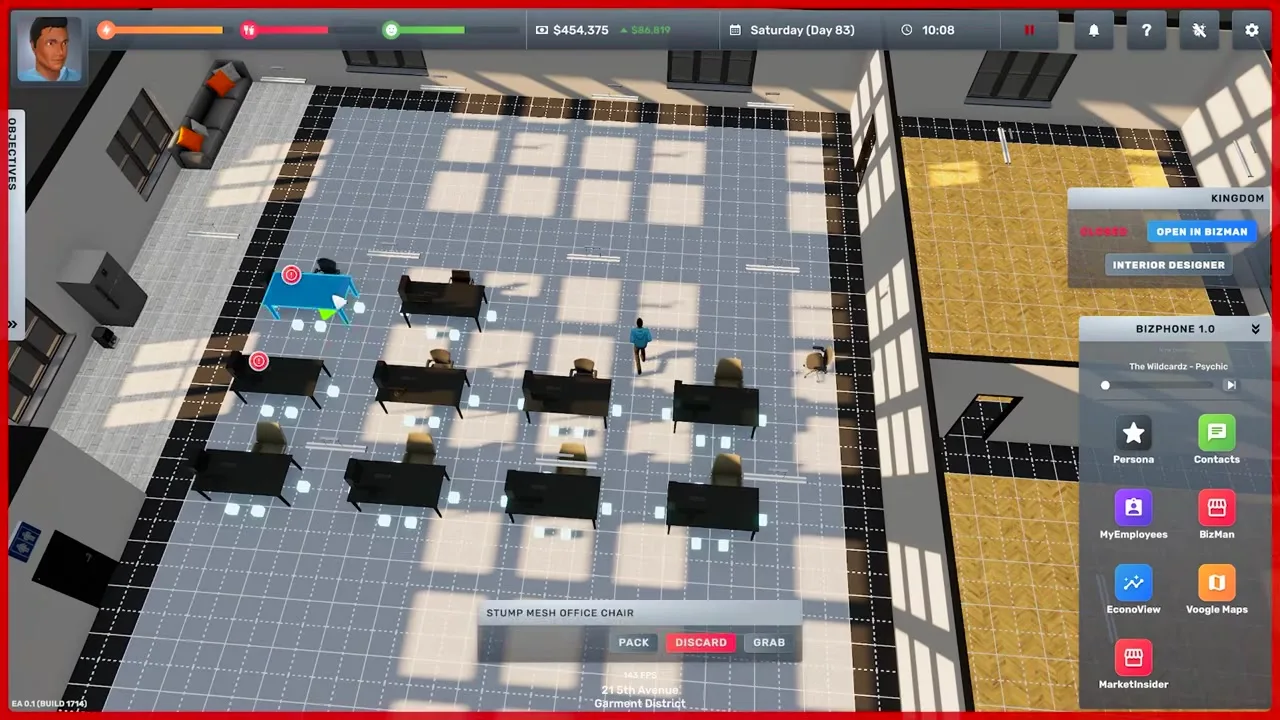
Seat a Purchasing Agent at headquarters with a desk and PC, then let contracts stop living in your head. Hire path: employees.
Cheap imports still need storage, drivers, and retail sell-through. If goods pile up in a warehouse nobody delivers, you paid for decoration.
That is the cue to ask whether you need a warehouse yet — or just a van.
Urgent importer options exist for panic restocks, but they punish sloppy calendars. Build delivery plans around known delivery days so you are not paying premium prices because you forgot a pier window. MarketInsider provider counts help you spot thin supply before it becomes an emergency.
A warehouse is staging infrastructure, not a vanity skyline piece. Rent one when multi-shop restock fights your calendar or import pallets need a home.
| Code family | Rough size | Vehicle slots |
|---|---|---|
| H1–H3 | ~690 m² | 1 vehicle |
| I1–I3 | ~1,292 m² | 2 vehicles |
| P1–P3 | ~2,184 m² | 2 vehicles |
| Q1–Q3 | ~2,610 m² | 2 vehicles |
Industry City concentrates warehouse/factory footprints, truck dealers, and industrial blueprints. Starter retail districts are for tills — not your first mega-warehouse ego project.
Fund warehouses from surplus, not desperation loans. Cash ladder: money guide.
Once pallets have a home, delivery plans decide whether shops actually receive them.
An empty warehouse shell with one shelf is not logistics. Place storage furniture so inbound SKUs have a home, keep aisles clear for worker pathing, and leave the vehicle dock unobstructed. Pretty showrooms belong on retail floors, not in H/I/P/Q buildings.
Logistics Managers schedule recurring deliveries from warehouse stock to your shops. Community reports often cite morning windows (around 8 AM) — confirm live in your build, then build the plan around shop open times.
| Input | Effect |
|---|---|
| Manager logistics skill | More shops / heavier plans |
| Vehicle type + cargo | How much moves per run |
| Parking slots | Hard cap on simultaneous trucks |
| Driver skill | Which vehicles they can operate |
| Shop demand | Under-deliver = empty shelves |
| Distance / routing | Time tax across NYC districts |
Wrong SKU quantities, missing drivers, or blocked parking look like “shops stopped selling.” Check warehouse on-hand and yesterday’s plan before you slash prices in panic.
When you produce in-house, the same delivery brain moves finished goods into retail. Vertical path: factory guide.
Vehicles are the physical limit — pick them on purpose next.
One plan dumping every SKU into every shop creates clutter and stockouts of the wrong items. Prefer plans that match what each storefront actually sells — liquor to liquor, electronics to electronics — once your chain diversifies.
Matched by build plan, shared topics, and guide progression — not random related links.
Early passenger cars are not logistics. Cargo capacity, fuel, auto-park, and driver skill gates decide whether delivery plans are real. Visual fleet + product icons: vehicles gallery.
| Use case | Direction |
|---|---|
| First cargo step | Affordable van / light truck with real cargo slots |
| Serious warehouse runs | Vord Courier D500 / Freight Truck T1 class haulers |
| Dealer districts | City Cars & General US Trucks in Garment; more in Industry City |
| Luxury sedans | Ego — terrible pallets-per-dollar |
| Auto park | Quality-of-life on larger trucks when available |
Buy the truck only when a Delivery Driver can legally operate it. Skill-gated vehicles sitting in the lot are loan interest with chrome.
Stable deliveries make factory verticals and sharper pricing worth the complexity. Price the goods you haul: pricing guide.
If you only needed the warehouse trigger, stop here and open a factory page when imports feel expensive.
Logistics fleets burn fuel and take damage. Budget garage time the same way you budget restocks. A broken truck on delivery morning looks identical to a “MarketInsider is broken” complaint from the shop floor.
Not on day one. Open once multi-shop stock trips or import pallets waste too much time.
A Logistics Manager seated at HQ, backed by drivers, vehicles, and warehouse stock.
Factories produce into the same logistics brain — see the factory guide.
Check import arrival days, warehouse on-hand, driver assignment, vehicle slots, and the delivery plan quantities.
Skill caps how many destinations and how heavy the plan can be. Raise skill, add vehicles, or split load across better trucks before blaming the role.
Only if a skilled driver and warehouse slots exist. Otherwise start with a smaller cargo van that actually moves daily.
Matched by build plan, shared topics, and guide progression — not random related links.