
Why are my shelves not selling?
Price may sit above local demand — check MarketInsider, then stock freshness, cleanliness, and delivery before blaming the genre.

Big Ambitions pricing guide: read MarketInsider demand, set markup that still sells, fix dead shelves, and unlock the 1.0 Pricing Manager at headquarters.
Markup habits and Pricing Manager.
~5 min read
This Big Ambitions pricing guide covers MarketInsider demand signals, markup habits, rival mix, and the 1.0 Pricing Manager that can push neighborhood-wide prices from HQ. Pricing is how Traffic Index turns into cash — or into dusty shelves. Verified August 31, 2026.
| Tool | Job |
|---|---|
| MarketInsider | Demand · lowest price · import index · providers · class mix |
| BizMan stock view | Shows what sits because price is wrong |
| Shop price editors | Per-SKU retail on the floor |
| Pricing Manager (1.0) | HQ push across a neighborhood |
| Cleanliness / stock | Non-price reasons shelves fail |
MarketInsider is the neighborhood truth serum. Check it before you raise prices, open a second shop, or blame logistics for “no sales.”
| Signal | Use it to |
|---|---|
| Demand | Decide which SKUs deserve shelf space |
| Lowest market price | Find the ceiling rivals already set |
| Import price index | Know your cost pressure |
| Provider count | Spot thin vs crowded supply |
| Class mix | Match gift vs jewelry vs budget retail |
| Export effects (1.0) | Watch how exports nudge import/export indices |
Murray Hill jewelry demand is not Garment District gift demand. Re-check when you expand districts — Midtown footfall with wrong class mix still flops. Always price the neighborhood you are standing in, not the one you wish you owned.
If MarketInsider says the category is cold, do not “fix it” with markup. Pick another type from best business or move the lease.
Once signals are readable, markup becomes a checklist — next.
Working-class heavy blocks reward accessible gift, coffee, and grocery-adjacent SKUs. Upper-mix corridors tolerate jewelry and premium electronics markups — until rivals undercut you. Re-read class mix whenever you expand into Murray Hill, Midtown, or The Hamptons retail strip.
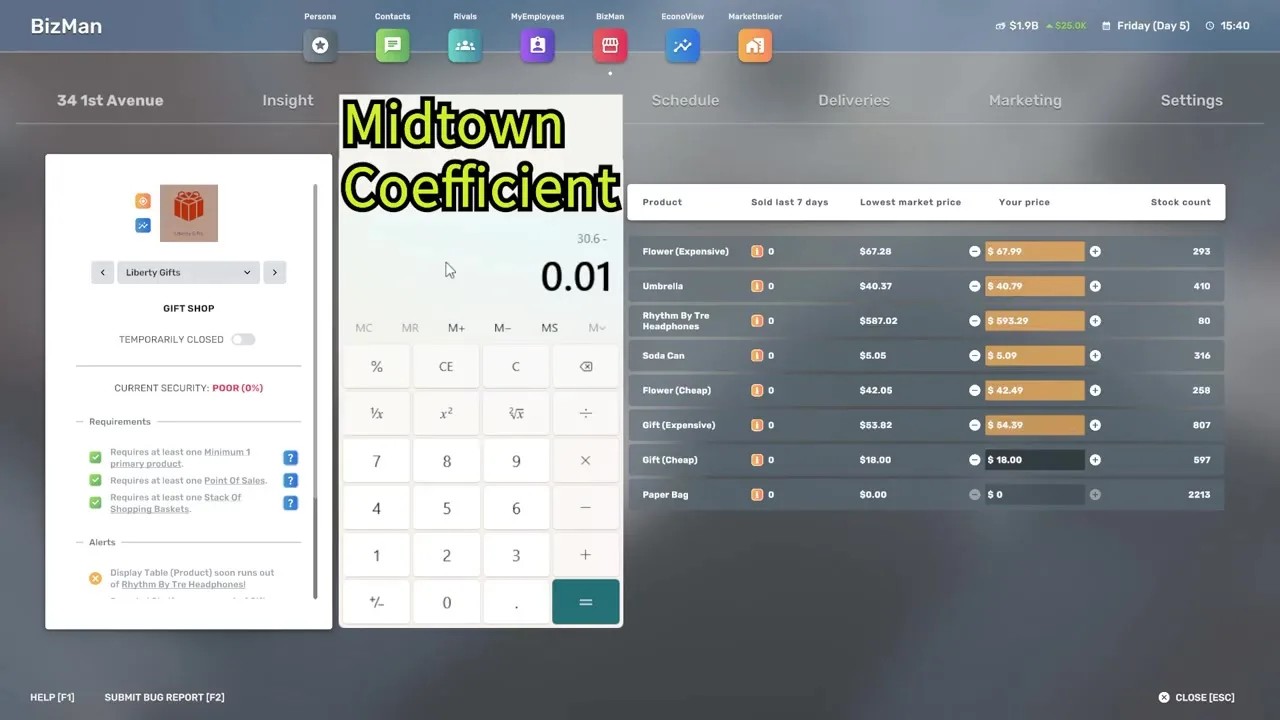
Markup is a dial, not a personality. Start near competitive floors, then nudge while watching sell-through speed.
Jewelry and electronics can wear higher margins and higher theft risk. Price without security is just advertising for shoplifters — hire path on employees.
Factory-fed liquor or electronics have different cost bases than pure imports. Recalculate when production comes online — factory guide.
When you run many shops, manual sliders become the bottleneck — Pricing Manager time.
Food-adjacent and trend SKUs punish prideful markup. If BizMan shows aging inventory, cut earlier than you feel comfortable. Dead stock ties cash that should be buying the next van or staff hour.
Players love tidy percentages. Markets do not. If lowest market price sits at an awkward number, match the competitive floor first, then take a thin premium only after shelves prove they move. Ego markups create full storerooms and empty tills.
Without a Pricing Manager, each storefront slowly diverges as you tweak one panic SKU at a time. Schedule a weekly MarketInsider pass per neighborhood until HQ automation exists — or accept that one shop will always be the “wrong price” outlier.
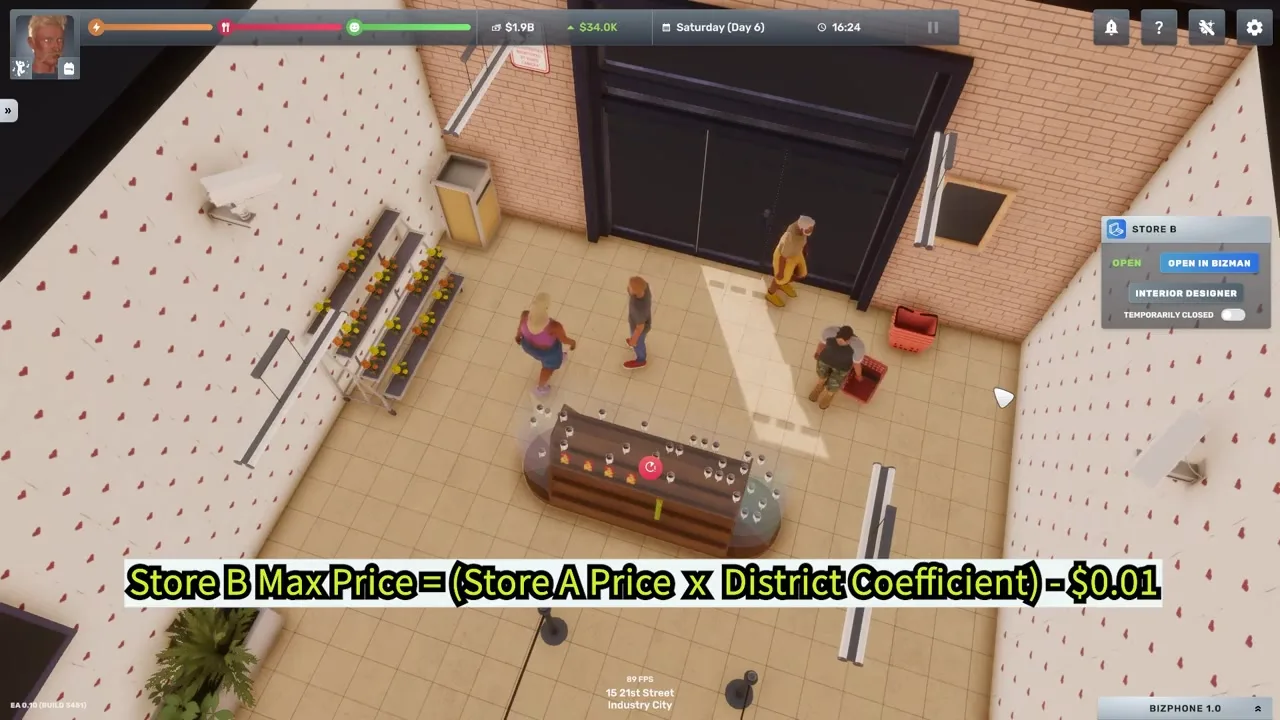
The 1.0 Pricing Manager sits at headquarters, reads market context, and helps push consistent prices across stores in a neighborhood so you stop editing every register by hand.
| Need | Detail |
|---|---|
| HQ office | Desk + computer assignment |
| Skill | Higher skill → sharper suggested prices |
| Scope | Neighborhood / multi-store pushes |
| Not a replacement for | Stock, cleanliness, or Traffic Index |
| Hire path | City Workforce-style manager recruitment |
One shop: optional. Three shops with drifting markups: high value. If you still lack Logistics and Purchasing, fix supply before perfect prices on empty shelves — warehouse logistics.
Many runs want Logistics/Purchasing before Pricing. Pricing shines after goods actually arrive on time.
If sales still fail after “perfect” prices, troubleshoot non-price causes next.
A low-skill Pricing Manager can push mediocre suggestions across every store at once — which is worse than slow manual edits. Train or hire up before you let automation touch your entire neighborhood catalog.
Matched by build plan, shared topics, and guide progression — not random related links.
Price is only one failure mode. Work this table before you torch your markup strategy.
| Symptom | Check |
|---|---|
| Browsers, no buys | Price vs MarketInsider lowest |
| No browsers | Traffic Index / open hours / neighborhood |
| Stock always full | Overpriced or wrong class mix SKUs |
| Stock always empty | Logistics / import day / delivery plan |
| Complaints / low stay | Cleanliness, music, staffing |
| High-value theft | Security guards + cameras |
Pricing fixes convert existing traffic into cash. If you need more capital before the next lease, return to the money guide.
Habit-level reminders also live on tips.
Perfect prices on a closed or understaffed shop still print zero. Confirm schedules cover peak Traffic Index hours before you blame MarketInsider. Staffing path: employees.
Price may sit above local demand — check MarketInsider, then stock freshness, cleanliness, and delivery before blaming the genre.
No. It is optional automation once multiple shops make manual markup painful.
No. Dead inventory is worse than a thinner margin that clears.
Export activity can influence import/export price indices — re-check MarketInsider after big export swings.
After neighborhood expansions, rival openings, import index swings, and whenever BizMan shows aging SKUs. Not every real-time minute.
Ads amplify traffic into a broken price list. Fix MarketInsider alignment first, then advertise full shelves.
Only when class mix and rival floors are similar. A Hamptons strip and a starter Garment block rarely want identical markups — Pricing Manager skill helps, blind copy-paste does not.
Matched by build plan, shared topics, and guide progression — not random related links.