
When should I open a factory?
After retail cash flow is stable and warehouse logistics exist — factories need inputs, workers, and delivery.

This Big Ambitions factory guide covers when to unlock production, floor layout, station families (jewelry, electronics, food, beer, tobacco, clothing, and more), and vertical integration into your own retail. Factories multiply margins after logistics exist — they are not week-one content. Verified August 31, 2026.
| Fact | Detail |
|---|---|
| Building home | Warehouse-style H/I/P/Q footprints |
| Workers | Factory workers + logistics for outbound |
| Common hubs | Industry City industrial district |
| Pairs with | Purchasing Agent inputs · Logistics Manager outbound |
| Not for | Day-one beginners without a shop till |
Open a factory when import margins hurt and you already sell the finished category. If you do not own a liquor shelf, a beer line is homework without a test.
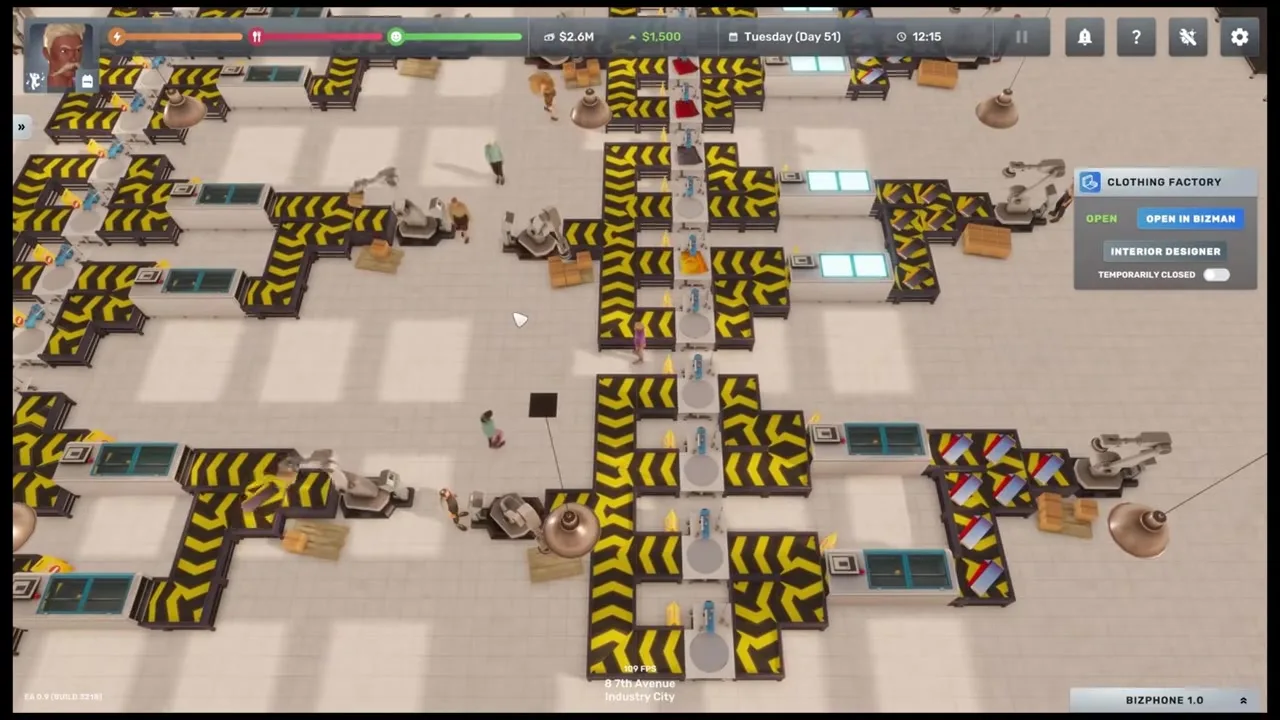
They convert logistics competence into margin. If you are still learning Basic HR, read the beginner guide and money guide first.
Factory systems were rebuilt across EA 0.10+ patches. Prefer current 1.0 station behavior over ancient tutorial memory — confirm recipes in-game before hard-committing floors.
When the timing is right, layout mistakes still waste the unlock — next section.
If a slow production week would force a panic loan, you opened too early. Factories should feel like margin upgrades on a boringly profitable retail base, not a Hail Mary after empty shelves. Revisit money guide if the till is still dramatic.
Think in flows: inbound materials → stations → finished goods staging → vehicle dock. Pretty aisles that block forklifts lose to boring straight lines.
| Zone | Keep clear for |
|---|---|
| Dock / parking | Vehicle slots — never build over them |
| Input storage | Raw materials near first stations |
| Production row | Stations with walking room for workers |
| Output staging | Finished pallets near outbound |
| Utilities / pathing | No decorative mazes that trap AI paths |
Steam Workshop blueprints and installer companies can speed layouts, but a subscribed cinema or retail blueprint will not magically become a good factory. Use industrial plans or hand-place with docks first.
Larger P/Q footprints and truck access make Industry City the default late logistics campus. Starter retail neighborhoods remain for storefronts.
With space reserved, choose which stations actually earn — not which look cool in a thumbnail.
Workers need clear routes between input storage, stations, and output staging. Decorative mazes that look like a showroom create idle machines. Leave dock lanes wider than you think you need — trucks and AI pathing both punish tight corners.
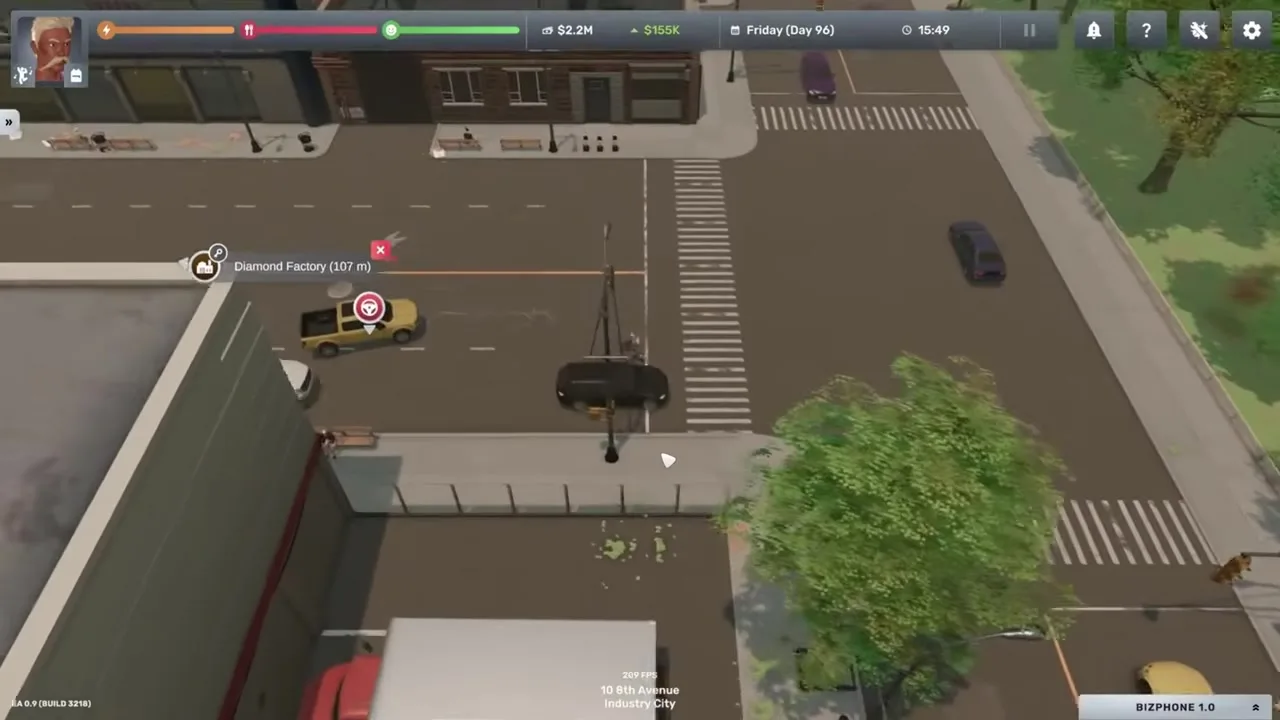
Station families cover jewelry, electronics, food, beer, tobacco, clothing, and related lines. Exact SKU recipes shift with patches — treat the table as a strategy map, then verify machine UI in-game.
| Station family | Feeds retail | Notes |
|---|---|---|
| Beer / spirits / wine | Liquor Store · Nightclub | Classic first vertical |
| Electronics | Electronics Store | High value · secure shops |
| Jewelry / gems | Jewelry Store | Margin king · theft risk |
| Clothing | Clothing Store | Many product-line variants |
| Food | Fast food / supermarket adjacency | Perishable complexity |
| Tobacco | Matching retail SKUs | Confirm demand locally |
A single beer line that keeps three liquor shops stocked beats five half-built stations waiting on missing inputs.
Factory workers are not cashiers. Budget wages and training separately from retail Customer Service hires — see employees.
Production only pays when finished goods reach shelves — vertical next.
If stations sit idle, check input on-hand, Purchasing Agent contracts, harbour delivery days, and whether upstream stations in a multi-step chain are actually producing. A jewelry polisher without gems is not a pricing problem.
Workshop layouts save time, but always verify vehicle docks survived the paste. A beautiful station row that blocks the only truck slot forces you to tear down production you just financed.
Vertical integration means you own the production and the shelf. Imports become backup, not the entire margin story.
| Step | Owner system |
|---|---|
| Buy/make inputs | Purchasing Agent + harbour or upstream stations |
| Produce | Factory stations + workers |
| Stage | Warehouse on-hand |
| Deliver | Logistics Manager + drivers |
| Sell | Your retail type with MarketInsider prices |
| Tune | Pricing Manager later for multi-shop sync |
Delivery plumbing: warehouse logistics. Shelf pricing: pricing guide. Which shop deserves the vertical: best business.
If MarketInsider shows weak demand for a SKU in your districts, a factory will not invent customers. Produce what already sells.
Recipe calculators are P1 tools on this site — until then, verify chains in the machine UI and keep notes.
Factory-fed electronics or jewelry arriving on schedule into an unsecured boutique just feeds theft. Pair vertical supply with guards and cameras on the selling floor, then retune markup with pricing guide.
Matched by build plan, shared topics, and guide progression — not random related links.
After retail cash flow is stable and warehouse logistics exist — factories need inputs, workers, and delivery.
Confirm in the live station UI; patch churn makes static SKU lists go stale. A calculator tool is planned as P1.
You still need staging and vehicle logic — treat warehouse buildings as the home for production floors.
Usually the category you already retail successfully — liquor/beer and electronics are common community starts.
Not strictly, but larger industrial footprints and truck access there make serious production easier than forcing factories into tiny starter retail blocks.
Count wages, input costs, idle time, and whether finished goods actually reach paying shelves. Idle lines are storage fees with sparks.
Matched by build plan, shared topics, and guide progression — not random related links.